Climbing Kilimanjaro is technically easy but physically demanding. You don't need ropes, crampons, or mountaineering experience β but you do need endurance, mental stamina, and respect for the altitude.
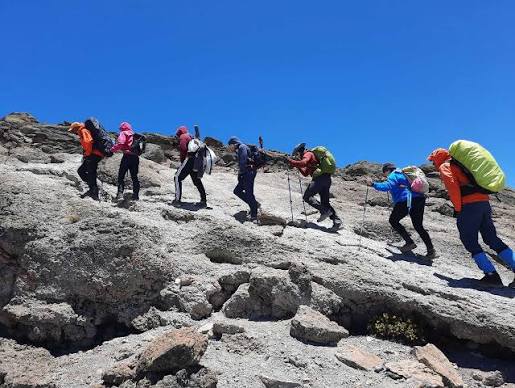
Kilimanjaro is a trekking peak, not a mountaineering peak. Technical difficulty: 1/10. You do not need ropes, harnesses, or climbing experience. Physical effort: 8/10. You will walk 5-7 hours per day for 5-9 days, reaching 5,895 m where oxygen is roughly half that at sea level. The challenge is endurance and acclimatisation, not technical skill.
1/10. No ropes, no crampons, no harnesses. If you can walk uphill for several hours, you can climb Kilimanjaro. The trail is rocky and steep in places, but it is a hike, not a climb.
8/10. You will walk 5-7 hours per day for multiple consecutive days, carrying a daypack, reaching altitudes where the air is significantly thinner. Summit night is a 6-8 hour push in freezing temperatures.
Many climbers ask: "Is Kilimanjaro harder than Everest Base Camp?" or "How does it compare to Mont Blanc?" Here is the honest comparison:
| Peak / Trek | Altitude | Typical Days | Technical Skill | Physical Demand |
|---|---|---|---|---|
| Kilimanjaro (Uhuru Peak) | 5,895 m | 5β9 | None (trekking) | High |
| Everest Base Camp Trek | 5,364 m | 12β14 | None (trekking) | Moderate-High |
| Mont Blanc | 4,808 m | 2β3 | Technical (ropes, crampons) | Very High |
| Mt. Rainier | 4,392 m | 2β3 | Technical (glacier travel) | High |
| Everest Summit | 8,849 m | 60+ | Expert mountaineering | Extreme |
Key insight: Kilimanjaro is higher than Everest Base Camp, but EBC treks take 12-14 days, giving your body far more time to acclimatise. Kilimanjaro compresses the altitude gain into fewer days, which is why acclimatisation strategy matters so much. See our success rate guide for how days on the mountain affect your odds.
The difficulty of Kilimanjaro doesn't come from technical terrain. It comes from three specific factors that every climber must manage:
At Uhuru Peak (5,895 m), oxygen levels are roughly half what they are at sea level. Your body needs time to adapt, which is why longer itineraries dramatically improve your chances. This is the #1 reason people turn back. Read our altitude sickness guide to understand what to expect.
You wake at around midnight in freezing temperatures (-10 to -20Β°C) and climb steeply for 6-8 hours to reach the summit by sunrise. It is cold, dark, and mentally demanding. This is the single hardest night of the entire climb.
You will walk 5-7 hours per day for 5-9 days straight. Even fit people feel the cumulative fatigue by day 4 or 5. Training for endurance β not just strength β is essential. See our training plan to prepare properly.
Yes. Kilimanjaro is widely considered the most accessible high-altitude peak in the world precisely because it requires no technical mountaineering skills. Every year, thousands of "average" people β from teenagers to retirees β reach the summit. Here is how different factors play into your success:
Age is just a number on Kilimanjaro. We have successfully guided climbers in their early 20s and climbers in their mid-70s. Older climbers often do exceptionally well because they tend to pace themselves better and listen to their guides, whereas younger climbers sometimes rush and burn out.
You do not need to be an elite athlete, but you do need a solid baseline of cardiovascular endurance. If you can comfortably hike 10 miles (16 km) on hilly terrain with a light daypack, you are physically ready. See our 12-week training plan to build this baseline.
There are no strict weight limits, but carrying excess body weight makes the physical exertion harder and puts more strain on your knees during the descent. Focus on functional mobility and joint health during your training rather than just the scale.
Kilimanjaro is frequently chosen as a person's very first major mountain. Because it is a "walk-up" peak, beginners thrive hereβprovided they choose a 7+ day itinerary to allow their bodies to adapt to the thin air. It is the perfect introduction to high-altitude trekking.
All five routes reach the same summit, but their gradients, terrain, and acclimatisation profiles differ significantly. Here is how they rank from most accessible to most demanding:
Gentlest gradient, hut accommodation. Often done in 5 days (too fast for good acclimatisation).
Steady northern approach. Gentler gradients, good for wetter months.
Gentle start with excellent acclimatisation profile. Longer distance but gradual gain.
Steeper than Lemosho, includes the Barranco Wall scramble. Very popular.
Steepest, most direct line to the summit ridge. Demanding and atmospheric.
Remember: route difficulty matters less than itinerary length. A 7-day Machame is often a better choice than a 5-day Marangu for most climbers. See our route comparison guide for a full breakdown.
"People ask me if Kilimanjaro is hard, and I tell them: the trail is not hard. The air is hard. The cold is hard. The mountain tests your patience, not your climbing skills. I have guided people in their 70s to the summit, and I have seen young athletes turn back because they rushed. Walk slowly, breathe deeply, and trust the process. That is how you reach the top."
Tell us your fitness level and available dates, and we'll recommend the route and itinerary that gives you the best chance of reaching Uhuru Peak safely.