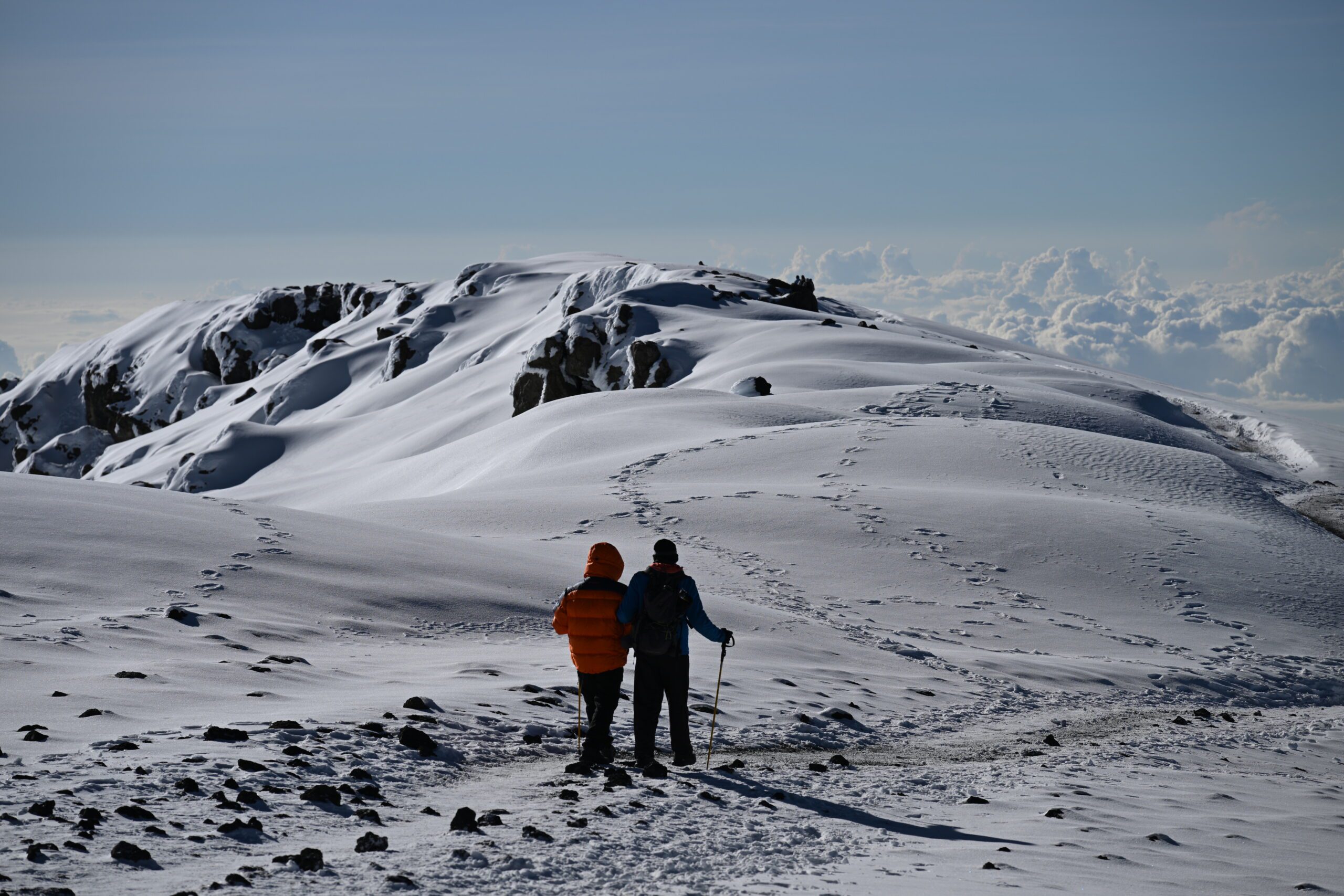
Climbing Kilimanjaro in January
★ One of the bestJanuary sits in the short dry season: warm at the base, clear skies and excellent summit visibility. It's one of the most popular months, so trails are busy and camps fill early — book well ahead.
- Base ~27°C · summit night ~-15°C
- Rain: low · Crowds: high
- Great for: clear summit photos
Climbing Kilimanjaro in February
★ One of the bestFebruary is like January — dry, warm and clear, with big summit views. It's the tail of the short dry season before the long rains arrive in March, making it a top choice for reliable weather.
- Base ~28°C · summit night ~-14°C
- Rain: low · Crowds: high
- Great for: dependable dry weather
Climbing Kilimanjaro in March
Shoulder seasonMarch is transitional — the long rains usually arrive late in the month. Early March can still be good; late March gets wetter. Fewer climbers and lower prices are the reward for some rain risk.
- Base ~27°C · summit night ~-13°C
- Rain: moderate · Crowds: medium-low
- Great for: value & fewer people
Climbing Kilimanjaro in April
Long rainsApril is the wettest month — heavy rain, muddy trails and cloud that often hides the summit. It's the quietest and cheapest time, but the least scenic. Only choose it if budget matters most.
- Base ~25°C · summit night ~-12°C
- Rain: high · Crowds: very low
- Great for: lowest prices, solitude
Climbing Kilimanjaro in May
Long rainsMay continues the long rains: wet, cloudy and quiet. Some operators run fewer departures. Conditions improve toward the end of the month as the dry season approaches. Low prices, low visibility.
- Base ~24°C · summit night ~-12°C
- Rain: high · Crowds: very low
- Great for: budget climbers
Climbing Kilimanjaro in June
GoodJune marks the start of the long dry season. It's cooler and greener than July–August, with fewer crowds and improving visibility. A great pick if you want dry weather without peak-season bustle.
- Base ~25°C · summit night ~-16°C
- Rain: low-moderate · Crowds: medium
- Great for: dry weather, fewer crowds
Climbing Kilimanjaro in July
★ Peak dry seasonJuly is the coldest month but also one of the clearest and driest. Expect crisp, stable trails and stunning summit views — and the busiest trails of the year. Book far in advance.
- Base ~24°C · summit night ~-20°C
- Rain: very low · Crowds: very high
- Great for: crystal-clear views
Climbing Kilimanjaro in August
★ Peak dry seasonAugust is like July — cold, dry and brilliantly clear. It's peak season, so routes are busy and prices are at their highest. Ideal if summit visibility is your top priority.
- Base ~24°C · summit night ~-19°C
- Rain: very low · Crowds: very high
- Great for: best summit conditions
Climbing Kilimanjaro in September
★ ExcellentSeptember stays firmly in the dry season: clear skies, stable trails and great visibility. Crowds remain high but ease slightly toward month's end. One of the most reliable months to climb.
- Base ~25°C · summit night ~-17°C
- Rain: low · Crowds: high
- Great for: reliable dry weather
Climbing Kilimanjaro in October
★ ExcellentOctober closes the dry season with warm days and clear summit views. It's slightly quieter than July–September and still very reliable. A favourite among experienced operators.
- Base ~26°C · summit night ~-15°C
- Rain: low · Crowds: high
- Great for: warm days, clear views
Climbing Kilimanjaro in November
Shoulder seasonNovember brings the short rains — usually lighter and more brief than the long rains. Trails are quieter and prices drop. You'll trade some sunshine for value and solitude.
- Base ~26°C · summit night ~-13°C
- Rain: moderate · Crowds: low
- Great for: value & quieter trails
Climbing Kilimanjaro in December
GoodDecember sees the short rains taper off and conditions improve, especially late in the month around the holidays. It's popular over Christmas and New Year, so book early for those dates.
- Base ~26°C · summit night ~-14°C
- Rain: low-moderate · Crowds: medium-high
- Great for: holiday climbs